Field notes · Sensory studio
Sensing food before naming it
Language often arrives too early. These notes describe how we slow the gap between seeing food and describing it, so texture, temperature, and sound stay vivid a little longer. Nothing here is a test—you cannot fail a sensory prompt.
Before words
We begin with vessels already on the surface—no recipe talk, no ingredient list at first. Participants notice rim height, glaze variation, and the faint ring when metal meets porcelain. That sound carries information about hardness, thickness, and how the hand must steady the bowl.
When people describe those details before tasting, they often discover preferences they had not articulated: a lip that feels sharp, a base that feels too heavy for one hand. None of that is good or bad; it is information you can use the next time you set the table.
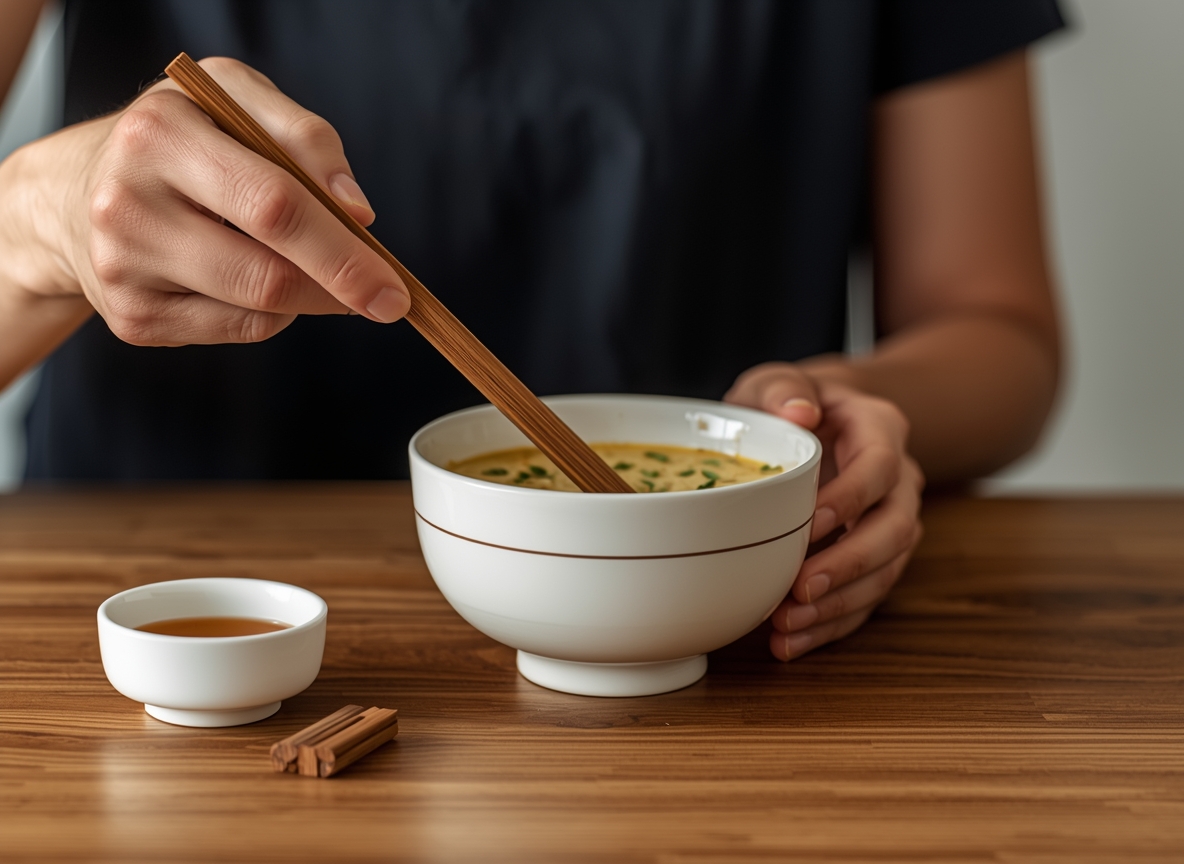
Naming can wait. Let the eyes and hands finish their first pass.
Sound as a cue
A crisp snap, a simmering whisper, or the scrape of a knife across a board gives timing information before taste arrives. We invite people to listen once with eyes open, then once with gaze lowered, so vision does not overrule hearing.
In group settings, comparing notes is often surprising: one person hears steam as “hiss,” another as “rush.” Neither is wrong; the point is to notice how language creeps in and whether you want to keep it thin on the first round.
- Count distinct sounds between sitting down and lifting utensils.
- Notice which sound stops first when cooking ends.
- If you eat with others, compare lists without ranking them.
Colour without judgement
Instead of rating a dish, we name three colours that repeat on the plate. That simple act often reveals harmony or contrast that might otherwise stay invisible. Brown beside green reads differently under cool LED than under candlelight—we mention that so people connect colour to context, not to virtue.
When someone says “too brown,” we ask what they expected to see instead. The conversation shifts from criticism to curiosity, which is where we want to stay in a studio setting.
Touch and temperature
We track the coolest surface you can reach without lifting food, the warmth of a cup through ceramic, and the moment steam begins to thin. These observations help people recognise their own sensitivity thresholds—some dislike heat on the upper lip; others find cool plates grounding.
If you journal, a single line per meal is enough: “fork colder than expected,” “bowl warmer than yesterday.” Patterns emerge slowly and without pressure.
Bringing it together
When you are ready to share how this lands in your own kitchen, write to the studio with a short note. Include one sensory detail you noticed recently—even a small one—and we will respond with suggestions tailored to what you describe. We also welcome questions about in-person sessions on Oxford Street when they are scheduled.
For habits that do not centre on the senses, see the Awareness page for pace, environment, and presence between meetings.
- Identify the coolest surface you can touch without lifting food.
- Notice the first aroma that fades and the one that lingers.
- Describe steam direction if warmth is present—does it rise straight or drift?